


On the Lötschberg Panoramatrail from Lauchernalp to Fafleralp
October 2024
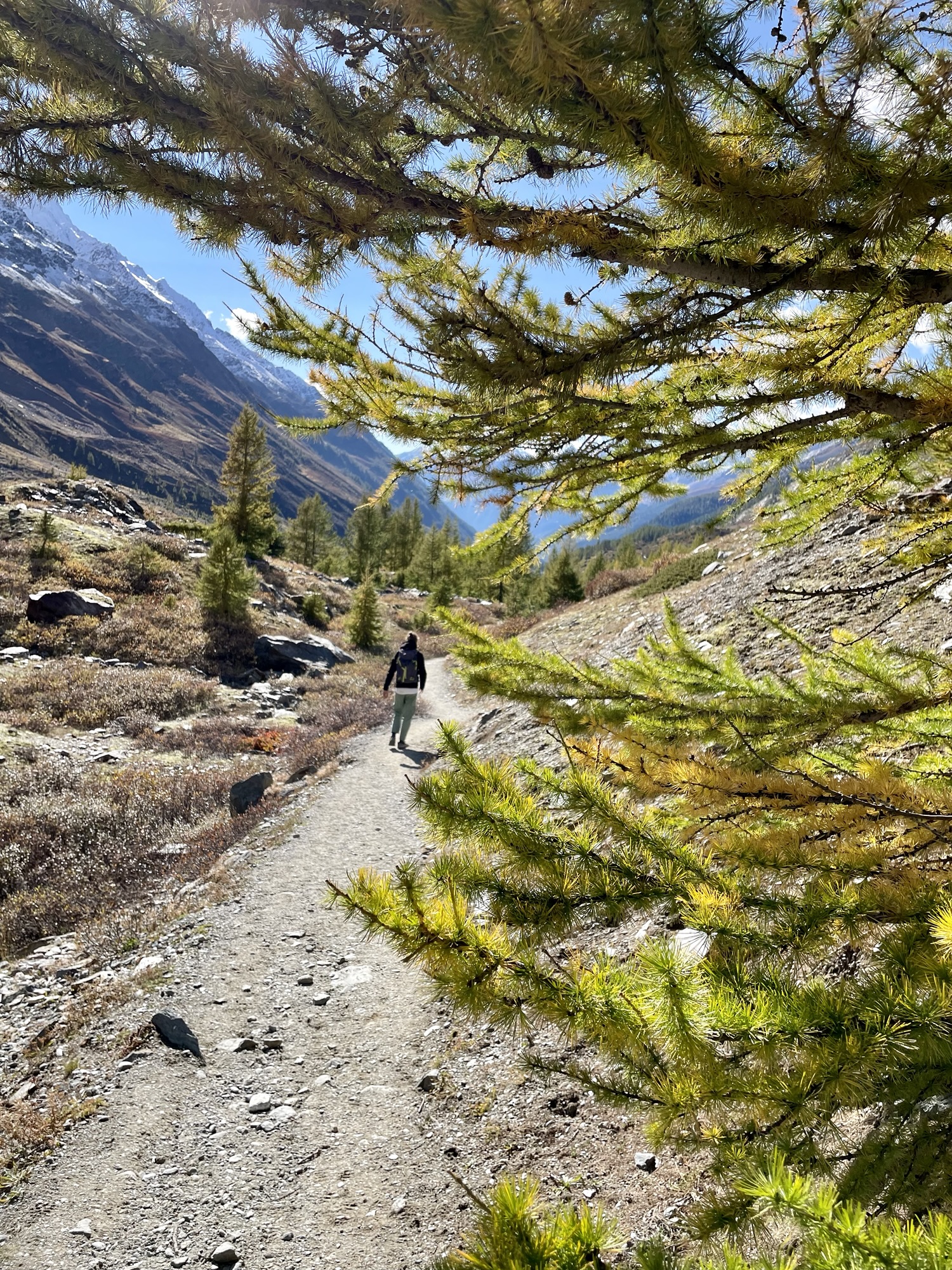
Something I have longed to see (again) for a long time was the Larches in their yellow dresses. There are a few places in Switzerland that offer amazing hikes in between the trees and one of them is the Lötschental in the Oberwallis. While we were probably just about ten days too early to see the trees in their completely vibrant yellow, we experienced an absolutely amazing hike.
From our home in Büsserach it is a bit of a drive to get to the Lötschental, so we started our drive quite early in the morning, packed up the car and started driving in the quiet dark direction Wallis.
To see the first mountains appear in front of me always makes me gasp in awe. Being from a region with rather small mountains, it just always feels like I am about to enter a different world. And when I have to press my face against the cold car window to be able to see those snowy peaks, I realize how tall they really are and how almost intimidating it sometimes feels to be at their feet. It promised to be a beautiful sunny day and the fog and white clouds slowly lifted from the ground, revealing a bright blue sky.
We parked our car in the village of Wiler right at the cable car, bought ourselves a coffee and a croissant and got in the cable car with other eager hikers. Slowly making our way up the mountainside, still laying in the shadows. Upon getting out, we were greeted by a biting cold air that lead us to immediately put on all remaining layers of clothing that we brought with us.
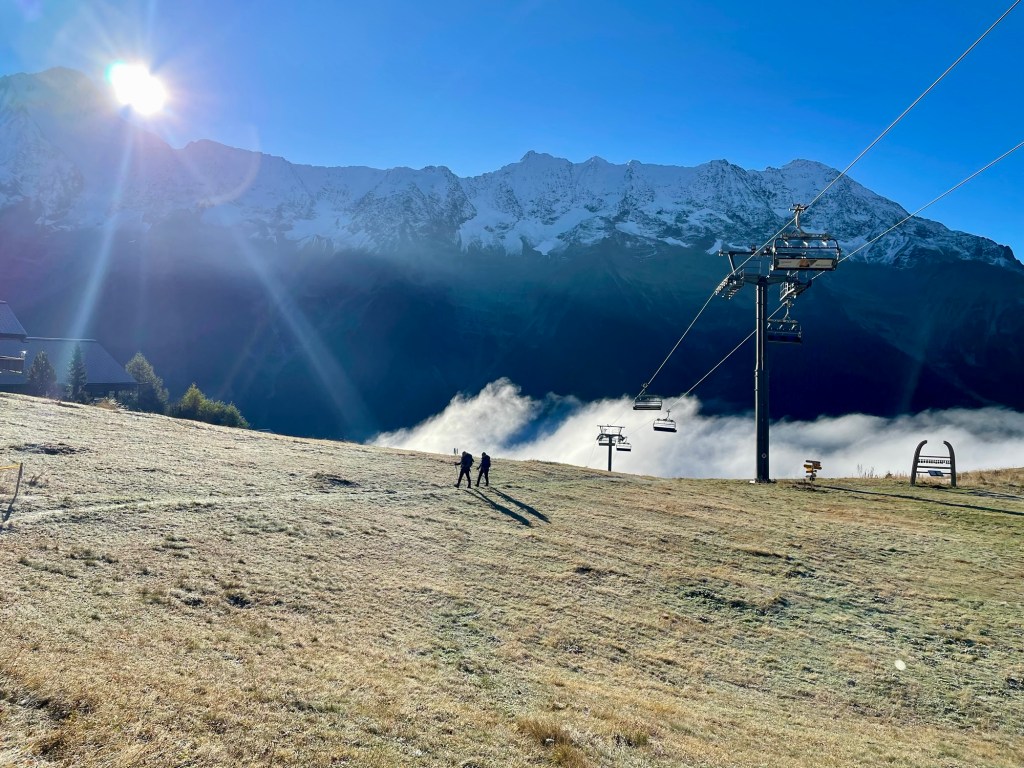
The frost on the grass crackled under our steps and shimmered in the first sunbeams, appearing behind the mountain range. A short but steep climb marked the beginning of our hike up to Stafel, where we would meet the Lötschberg Panoramatrails fourth section. We had a breathtaking panoramic view over the mountains across: above all the almost 4000 meter high Bietschhorn.
Immediately I could feel the presence of ancient traditions and magic within this valley, which is largely part of the “Jungfrau-Aletsch” UNESCO World Natural Heritage Site. The area was proven to already be traversed in the Bronze and Iron Ages; the Lötschenpass has been a trade route and the excavations of Celtic cremation graves near the village of Kippel indicate that it was a pre-Roman settlement; the Lötschental was part of the Roman province of “Vallis Poeninae”.
We continued out of the village on a narrow trail, winding its way along the mountain. The complete silence was almost soothing; no traffic sounds, no voices carrying to us, just the sound of our steps. Slowly the sun began drenching everything in this warm golden light that lead to our bodies, the grass blades, and rocks casting long slim shadows on the ground.

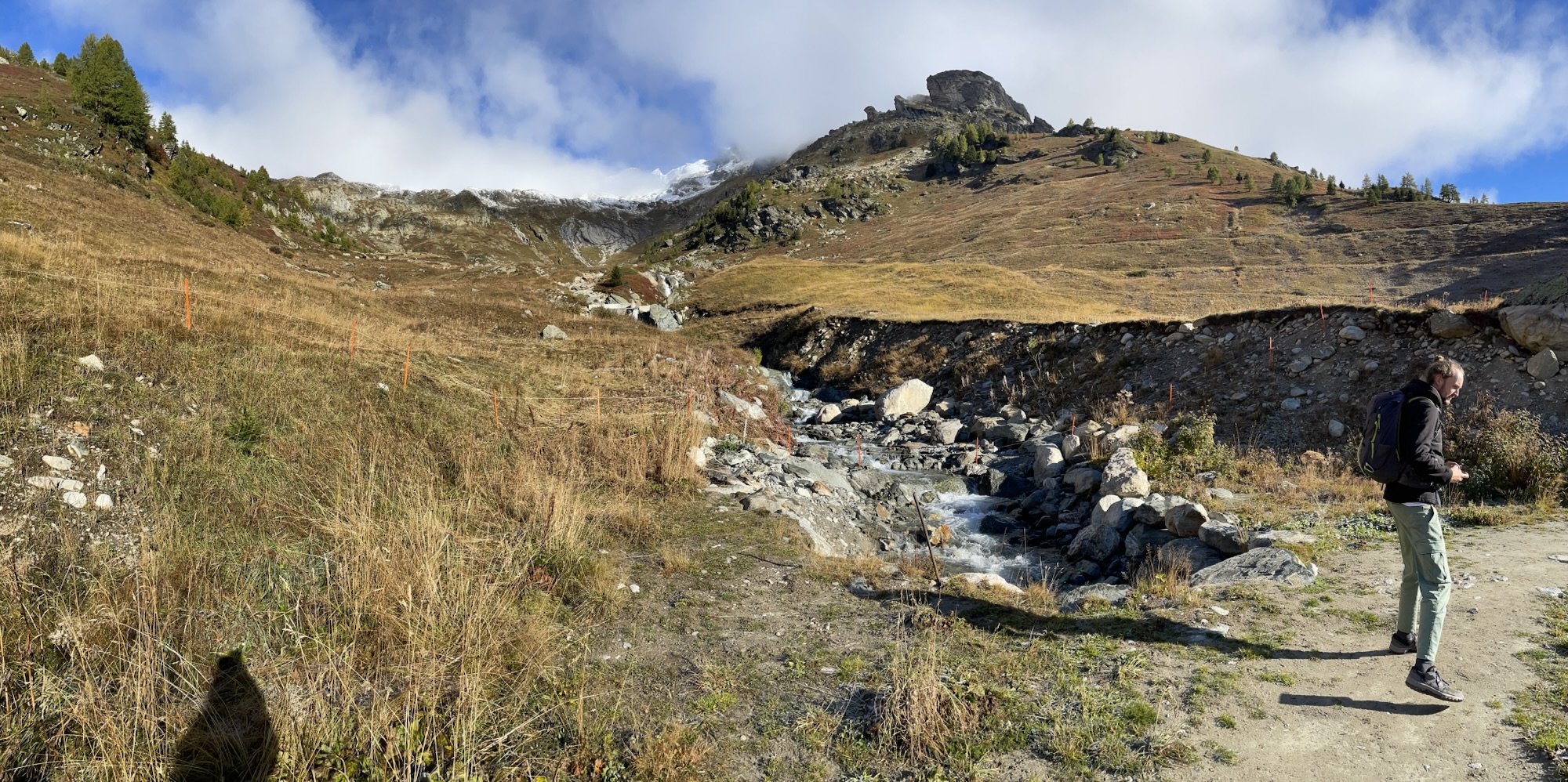
To continuously walk next to those majestic mountains and glaciers across the valley felt like a great honor and at the same time awakened the now familiar urge to climb them all – stand on the top and get to understand how small we actually are in the great scheme of things. And simultaneously I appreciated knowing that not all of them are even frequently visited by us humans.
The trail let us walk effortlessly along the slope not having to pay attention to our steps but rather let our gaze wander through the valley. The fir trees standing upright, their pointy tops reaching towards the sky, the burgundy-red bushes nestled among the bright green undergrowth, the white peaks glittering in the sunlight. And still this peaceful quietness, almost like sitting in the theater, waiting in admiring excitement for the spectacle to begin.
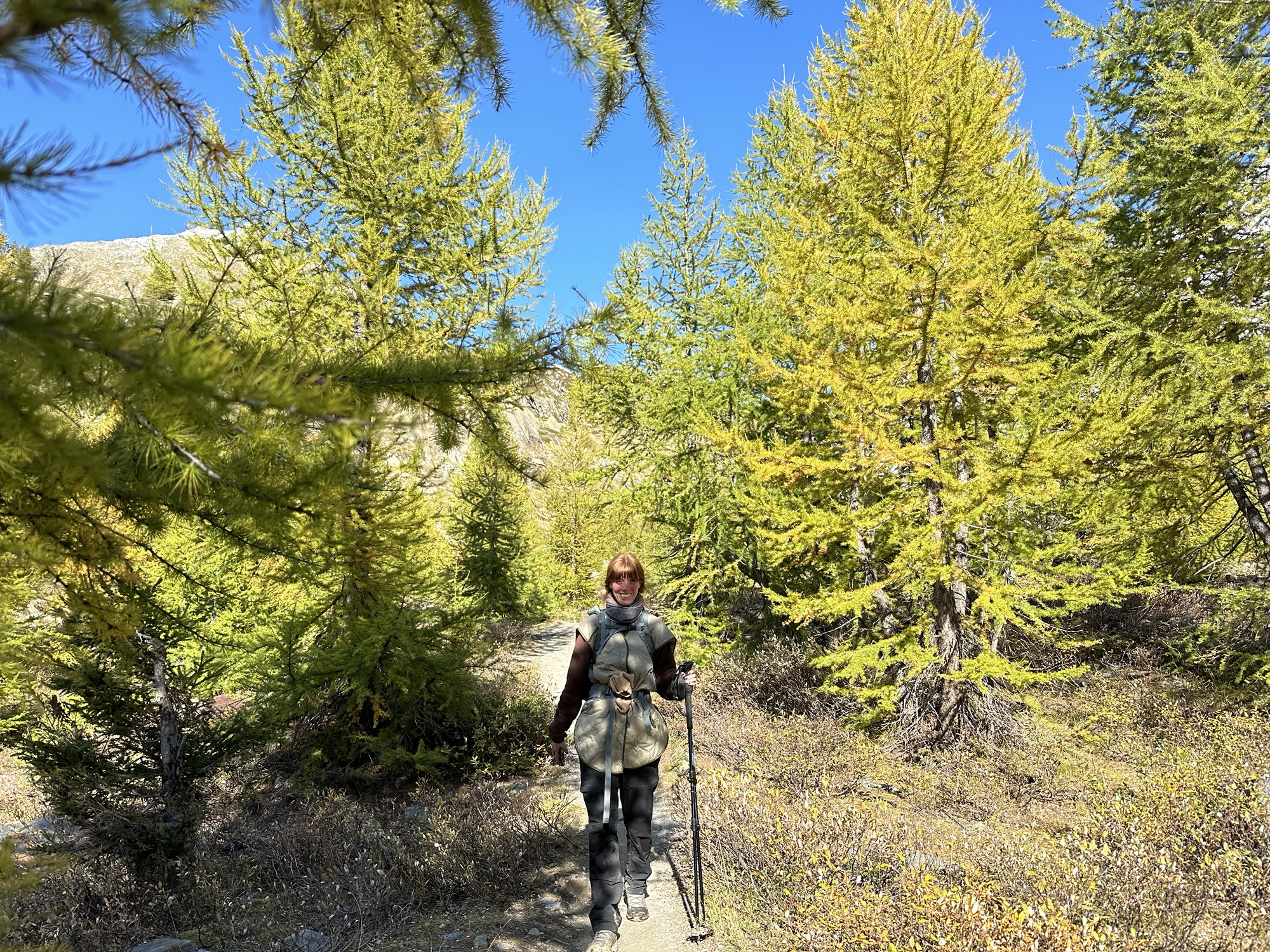
We entered the forest, and were surrounded by the larches whose needles already started to turn yellow. What we learned is that the valley actually received its name from this ancient tree: the place name “Lötsch” indicates the presence of larch trees. The larch came to the alps over a million years ago from Siberia and under the given circumstances here in Switzerland they can grow up to 54 meters high and live to over 1000 years. Next to mountains, trees have a similarly awe-inspiring presence in nature. And it felt wonderful to be surrounded by them.
The trail softly wound itself though the forest, we marched over big stones, soft soil and layers of needles. There was a gentleness to this forest; a nurturing almost cradling feeling. And while stunning, it still allowed us to catch our breath from the almost overwhelming impressions. That feeling, as if you can’t take any more impressions because you are already so full of them. And this forest allowed for a gentle break before we would inevitably (and luckily so) get more amazing views.

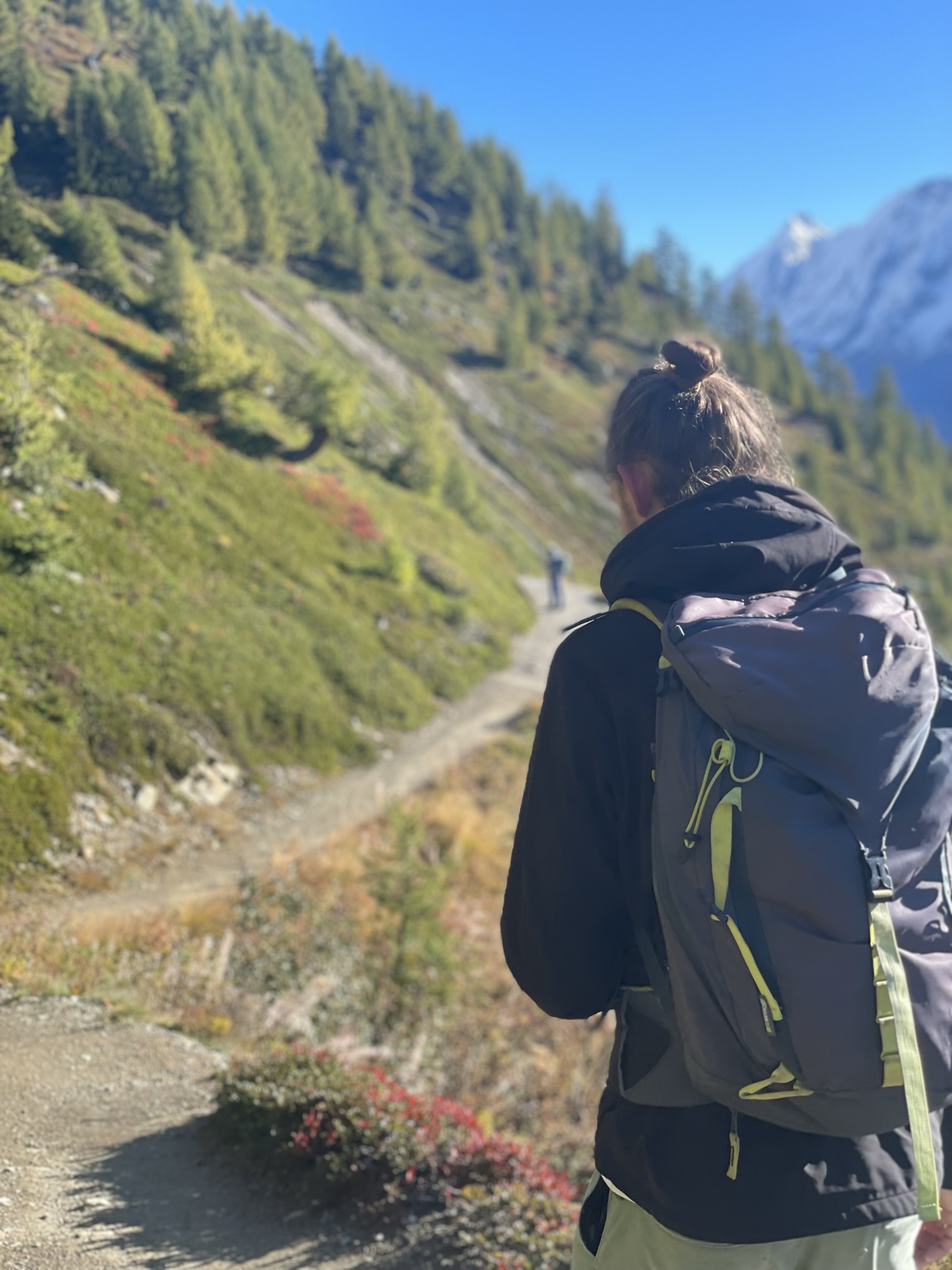


Continuously but very subtly descending, we soon reached Tellistaffel, where a restaurant would allow for a break, but we wanted to continue walking – knowing that we still had quite a way to go.
Soon we were back in the forest before reaching the first of two impressive mountain lakes, another element of natures royalty: the Schwarzsee. The trees and surrounding rocks and mountains reflected in the clear green water, small fish cavorted beneath the surface of the water and the blue sky and the sky mingled its light blue color with the emerald green of the lake. Despite not being alone at the lake and sharing it’s beauty with other hikers, there was a calm peaceful and silent energy which I greatly appreciated.
There is a legend surrounding the Schwarzsee which, along with other waypoints on the Panorama Trail, can be read about on the “Lötschtaler Sagenweg”. The legend says, that a young countess lived in her castle at the lake; not interested in getting married but having many suitors come to ask for her hand in marriage, she challenged every single one of them, to pick carnations growing at the walls outside her window. All of them failed and fell back into the lake that swallowed and never released them. After another young suitor and son of a merchant from Venice lost his life after falling into the lake, the merchant uttered a terrible curse. A hurricane brushed over the mountains, burried the castle under stones and the lake swallowed all the precious treasures of the young countess, where they dissolved and gave the bottom of the lake its black color. The legend says that the countess was turned into a white snake that must pay for her many misdeeds in the lake and can only show herself every ten years in the hopes that a nobleman kisses her three times to be released from the curse.
We didn’t encounter the snake; I think I would have asked Sam to release her from the curse right away – even though technically he isn’t a nobleman. I think he would’ve qualified though…


After a short break, we continued our hike. The vastness around us was almost overwhelming. The endless blue sky; like a dome above us. The saying “the sky is the limit” never sounded more inaccurate because to me it felt like the sky showing us that there are no limits. Just space.
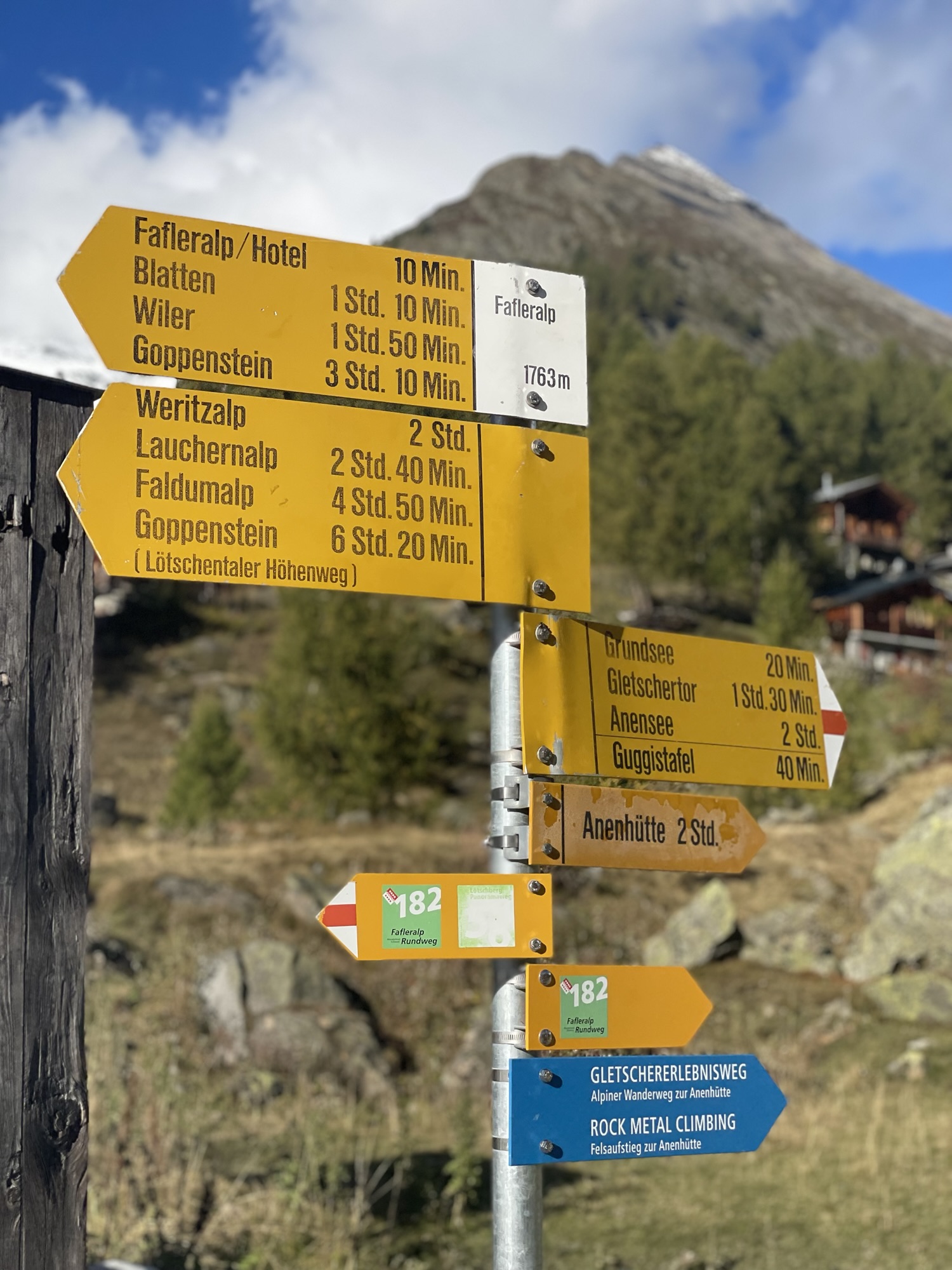
Above the Chiemwald at the rockwalls, I felt a slight tingling in my hands from the view down for the first time since we started hiking. But I had no real worries as the trail still was even and wide enough to walk comfortably. We slowly made our way down to Fafleralp, from where we branched off from the “Lötschtaler Panoramatrail” and walked over the Faflermattä to get on the “Fafleralp Rundweg” which we would continue to hike in almost its entirety.
We knew that from here it would be an almost constant climb all the way to the Anenhütte, our last and highest point at 2’355 meters, before heading back down. So we took some time at Guggistafel to have some lunch and regain our energy for the climb.
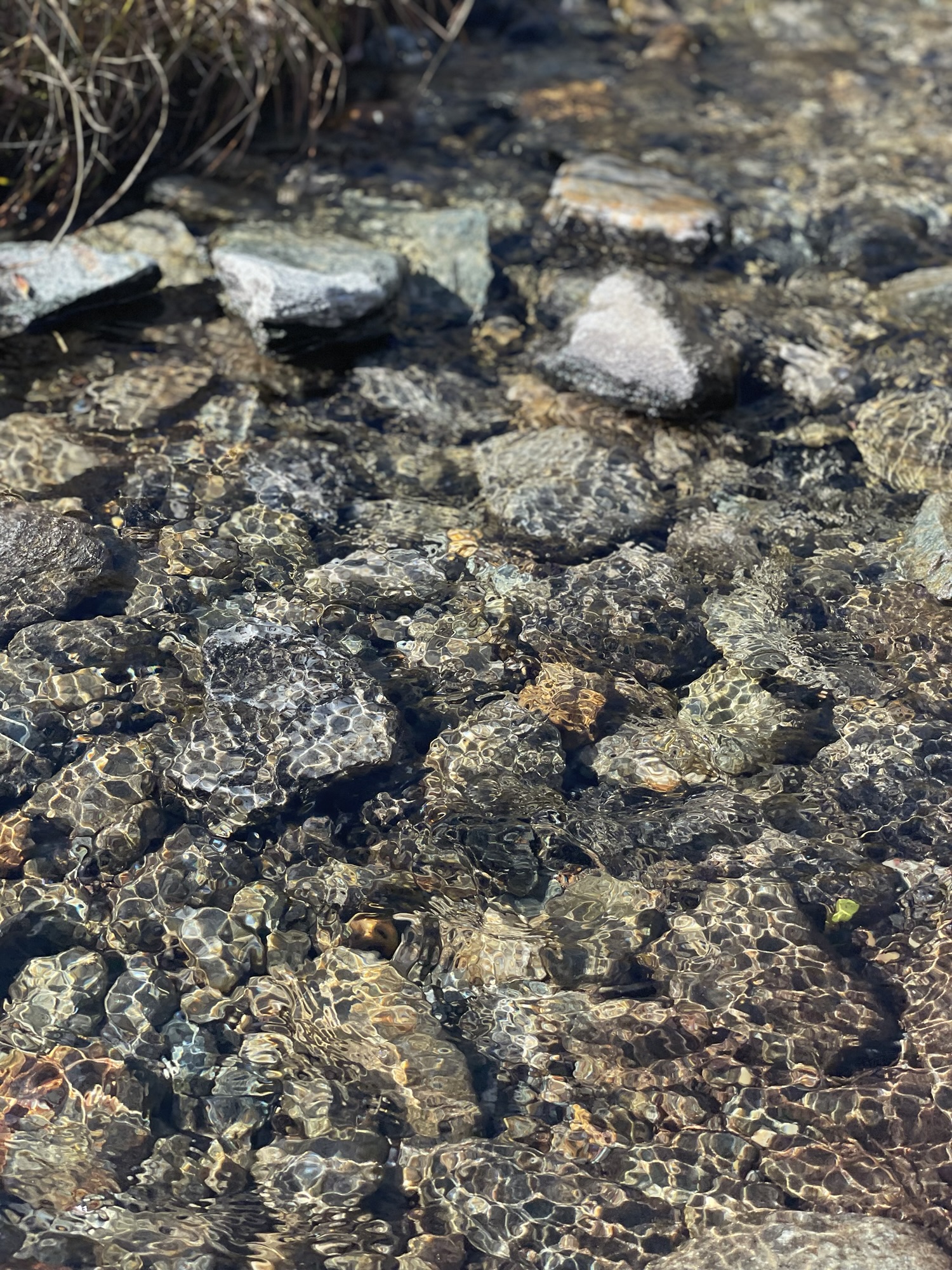
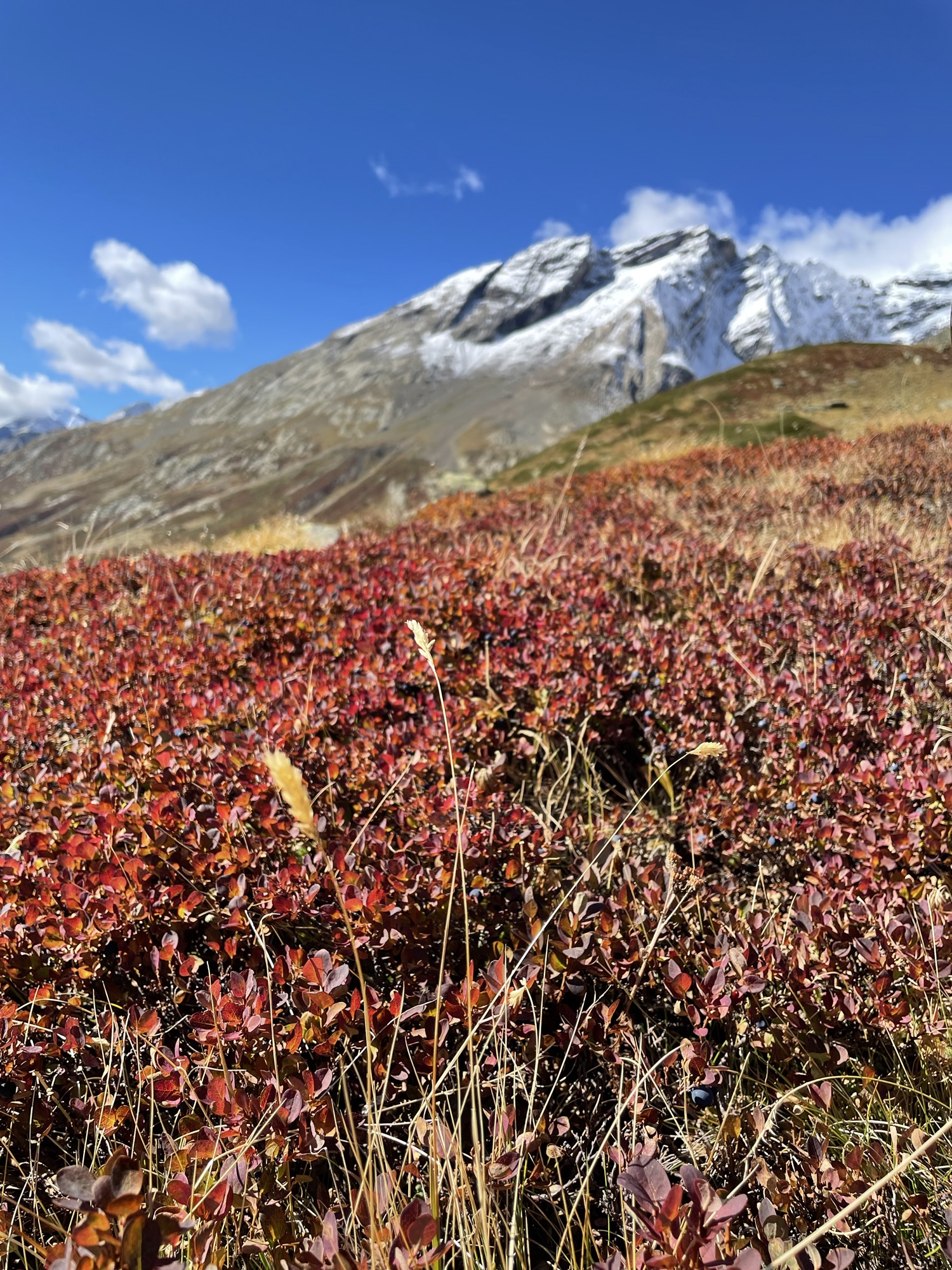
Even though not fully above the treeline yet, we left most of the trees below us, slowly entering a different more “barren” landscape. I put that in quotes, because I associate barren with desolate or bleak and this landscape was anything but that. Colorful bushes lining the path, lichens, moss, little riverstreams meandering through the fields glittering in the sunlight and the endless mountain chains covered in snow surrounding us.
After a while we reached the Guggisee, the second lake on our hike. Again I was touched by the peaceful energy of the various visitors around the lake. Friendly smiles were exchanged, marking the shared appreciation.


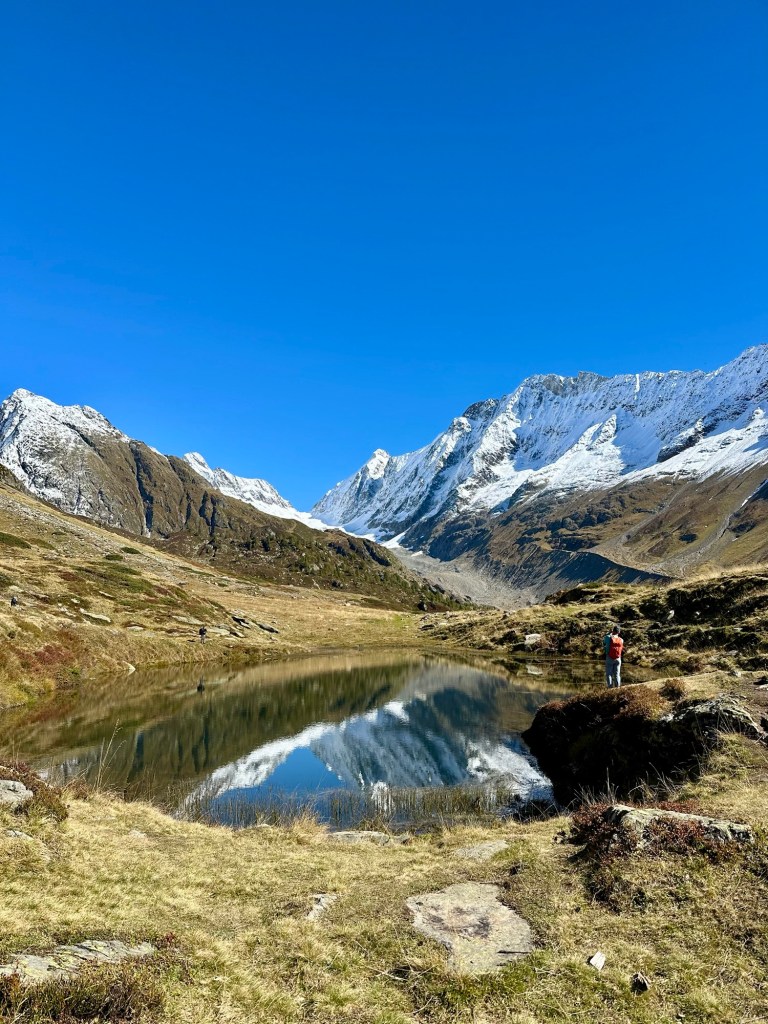
At about 2’100 meters we noted that we felt the air slowly getting thinner due to the height. And Sam alluded to his slowly growing physical exhaustion. By this point we were hiking for about five hours and the warm sun burning on our heads as well as the steady ascent of the last hours started to get to him. But the will to reach that hut was bigger and we continued on.
We now reached the part of todays hike that is marked as a T2 trail. But I can assure you right away, I managed this without any issues. The trail says wide, surrounded by fields and meadows, barely exposed with some minor exceptions that can be tackled with the right company and a focus on the steps ahead of you rather than down to the valley.
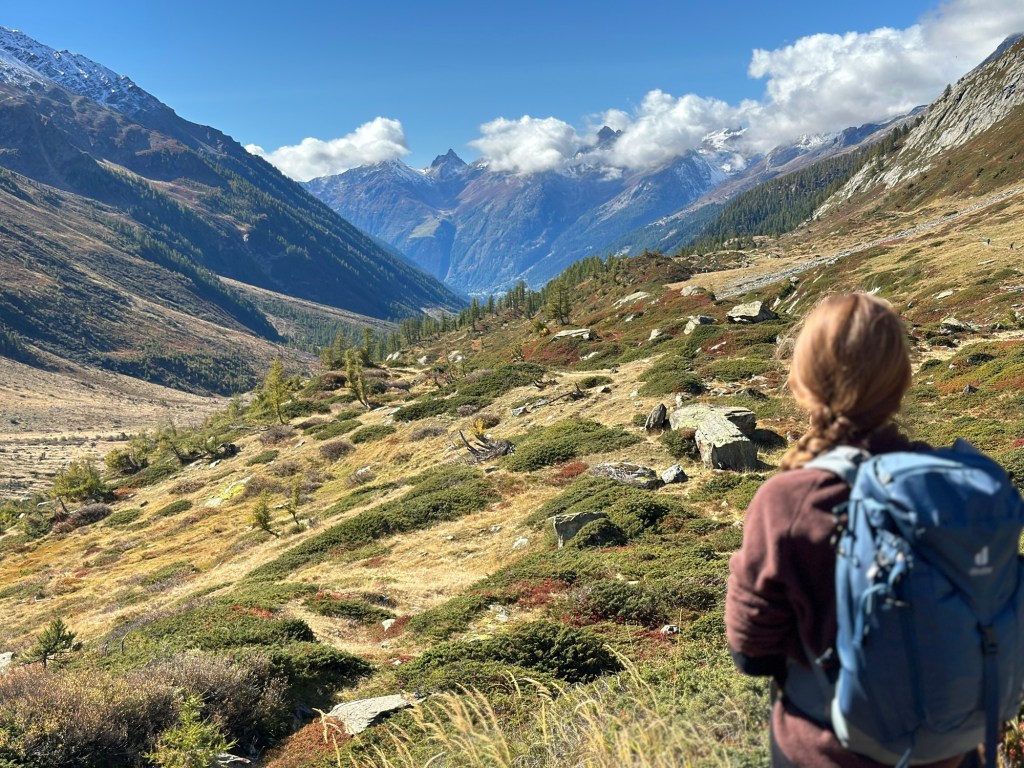


Those last 45 minutes to the Anenhütte were tough, simply because by this time we have had a long day since we got up in the morning. And it somehow felt, as if the hut was constantly moving further away from us. But we did reach it and as was to be expected it felt so rewarding and amazing. It was truly a magical moment. And despite there being many other people, for us this was our moment. Every single person seemingly got to enjoy this moment for themselves. And to me it felt as if the view, the mountains were there for me – and me alone. I guess that is something one can especially (if not exclusively) feel after climbing a mountain. Something I just don’t get to do so often yet due to my fear of heights. But as this hike proved again: I am getting there.
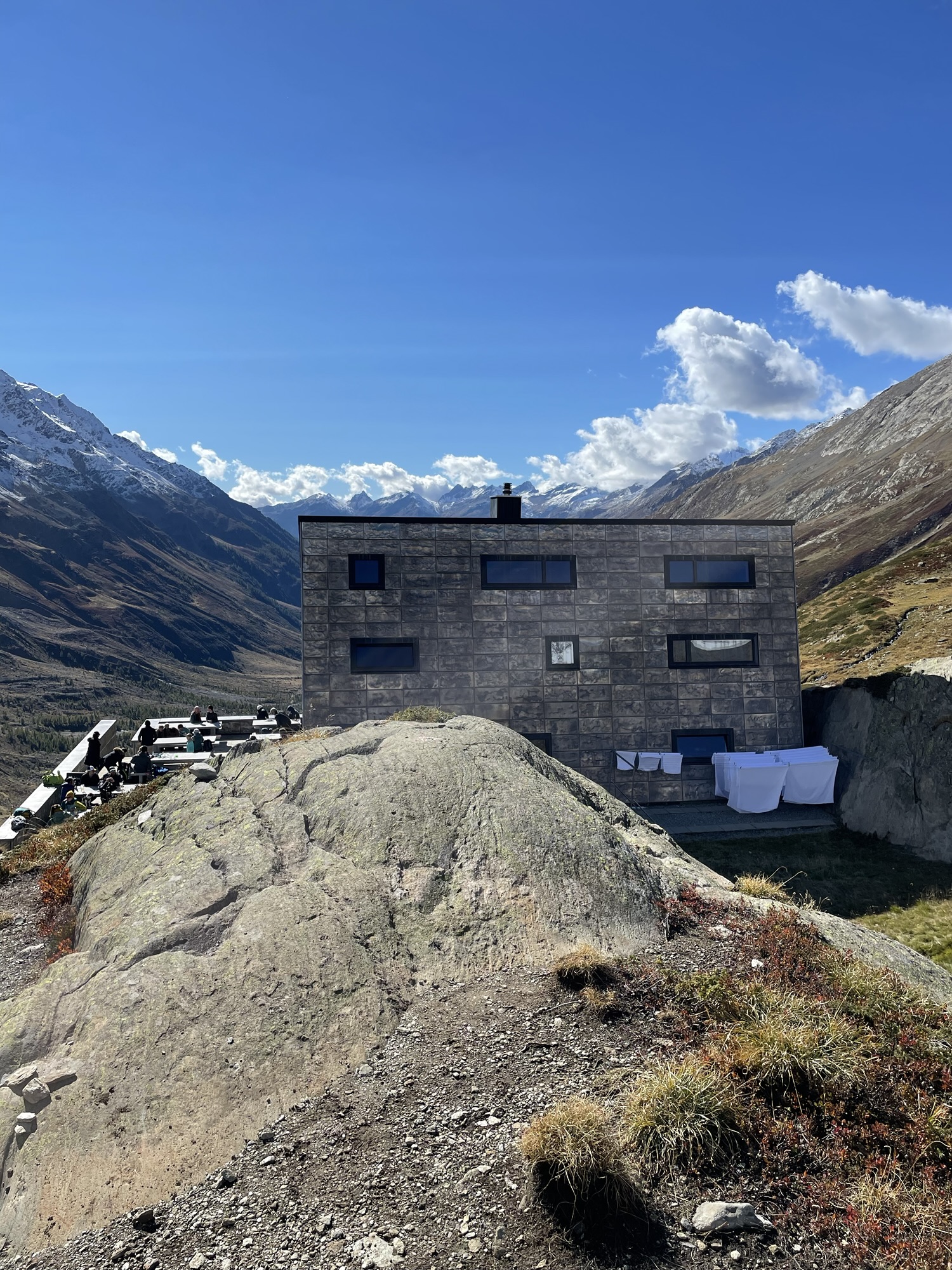
The Anenhütte was first built between 1993 and 1995 with 50 sleeping paces. After being completely destroyed in 2007 by a dust avalanche, the Anenhütte was rebuilt despite some dissenting votes which luckily didn’t hold enough power. The hut is located outside of the construction zone in the middle of a Unesco World Heritage Site so the conditions for a rebuild were extensive and the care that went into the design is very noticeable. The modern looking construction (which was chosen to deflect the forces and assure no projections) fits seamlessly into the rustic, mystical surroundings. It was absolutely noticeable that the builders were aware that no modern achievement could replace the fascination and attraction that the mountains and nature up here have.
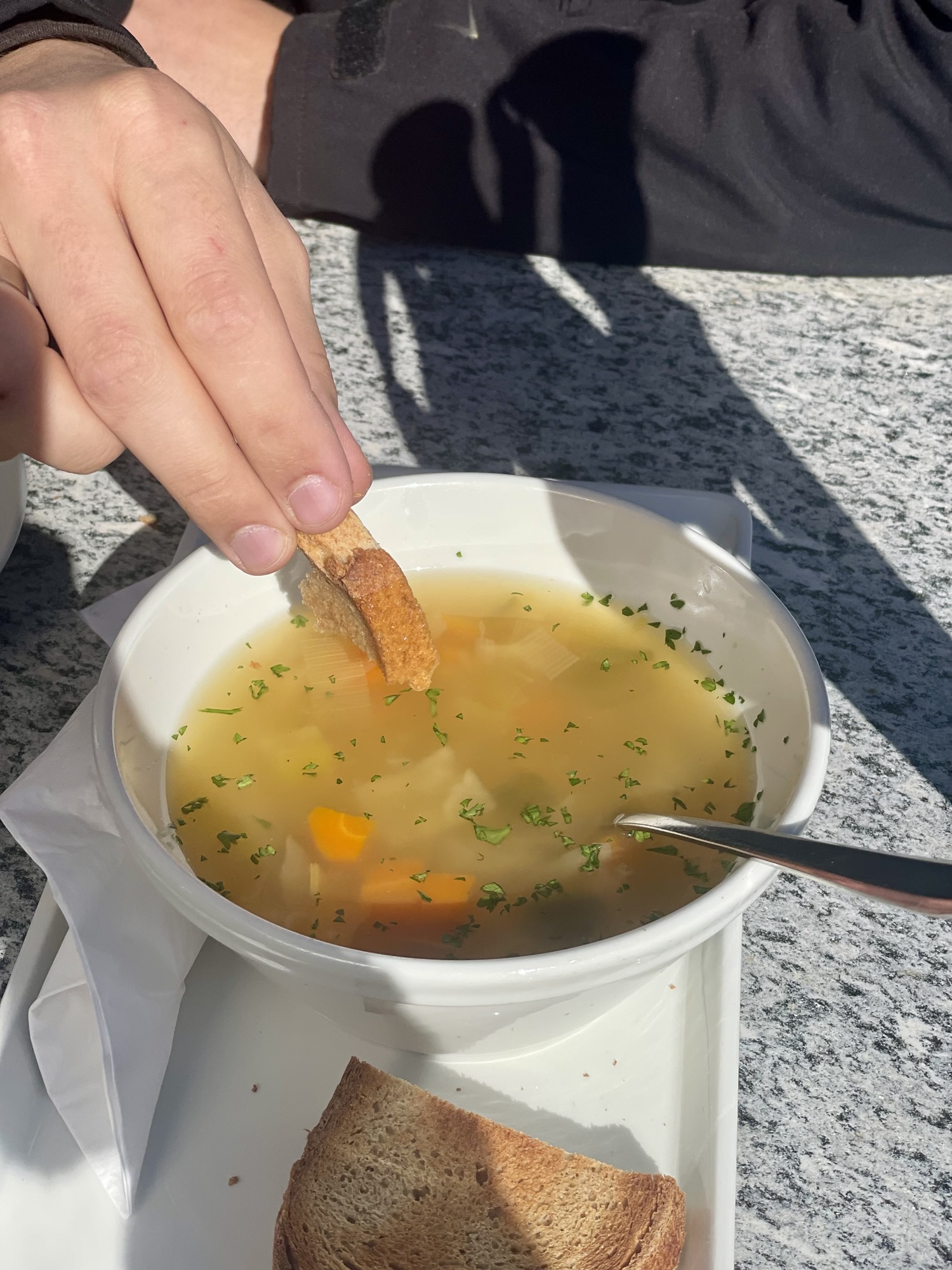
There was no better reason than this view, this amazing location to enjoy a lunch. We ordered a vegetable soup, a piece of apple pie and something to drink. It was exactly the right kind of simple nourishing food this day called for and Sam slowly could regain some energy. The fresh air, the cheerful chatter of the other people and one little lone yellow butterfly, which fluttered over the guests’ plates stayed so warmly in my memories.

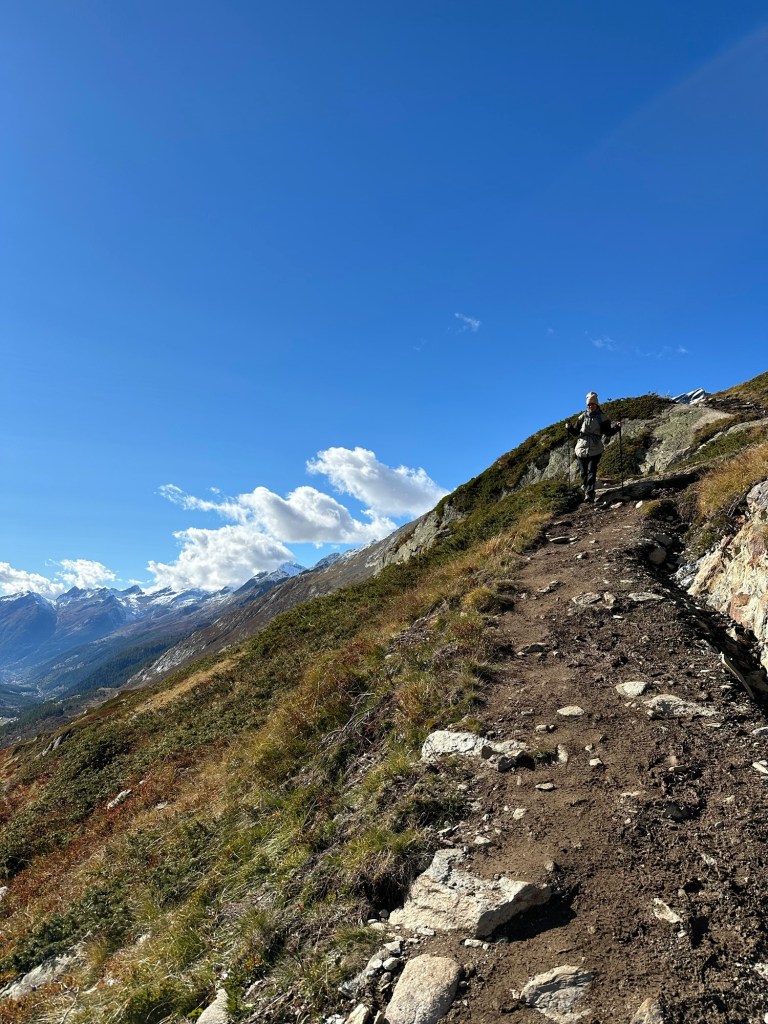
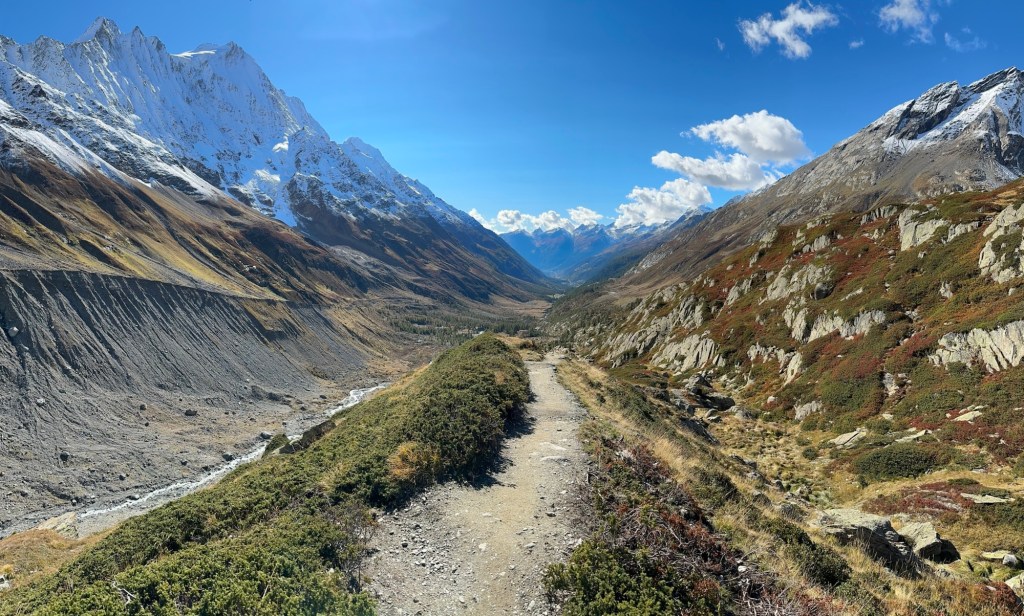
After our lunch we started the descent and last section of our hike. We followed a wavy trail next to the edge. This is where I experienced some challenging moments but the view truly made it worth to endure those; the river Lonza winding its way trough the valley was another magical sight.
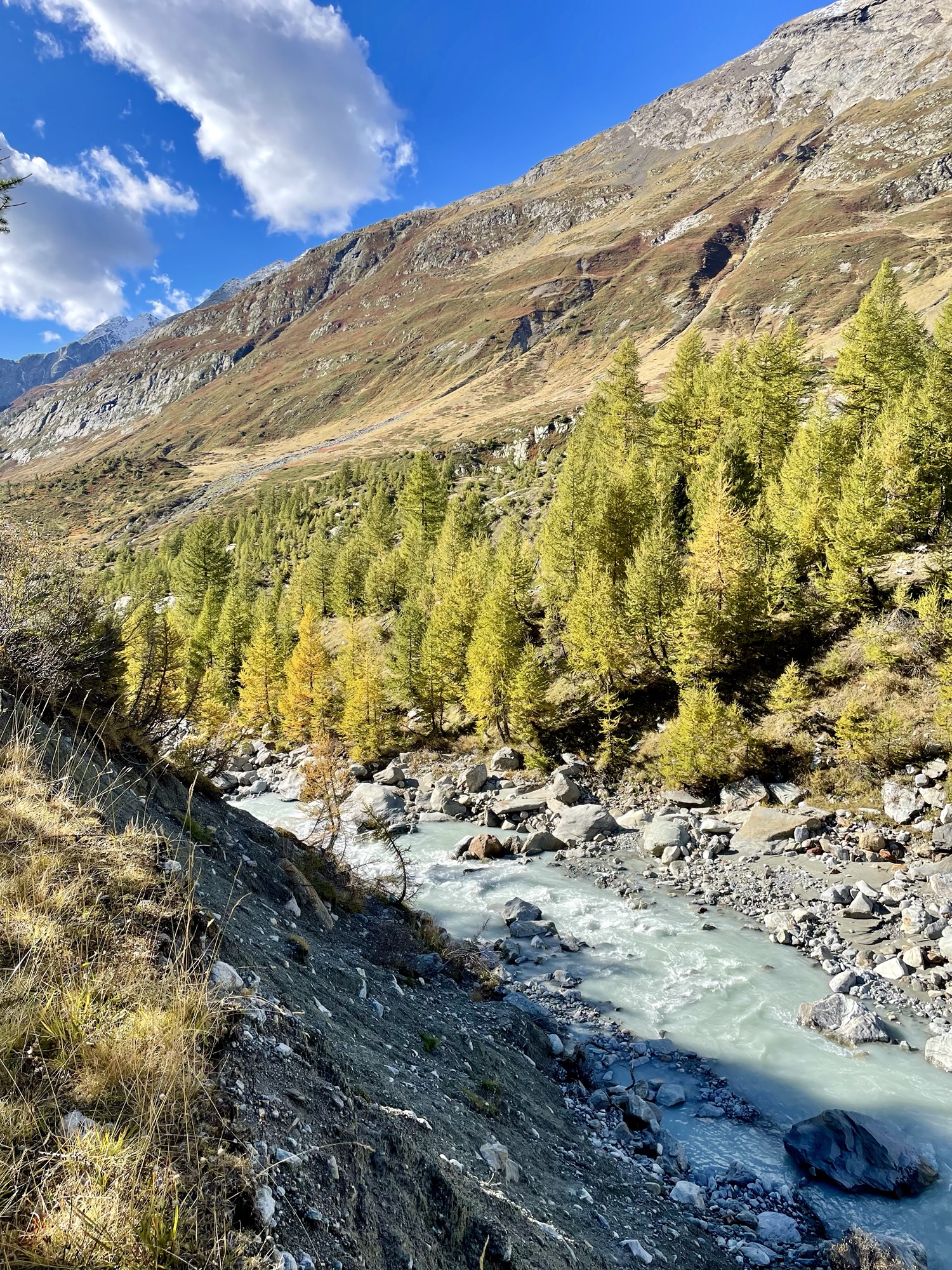
We reached the valley and for the remainder of the very gentle descent, we got to walk next to the river and still got to see some beautiful yellow larches, showing off their bright colors against the silvery blue water and the white rocks. It filled me with so much happiness to encounter more of those much awaited yellow trees. After such a strenuous ascent it felt very rewarding to get to just walk straight ahead on almost even ground. And the flowing body of water helped to move us onward.

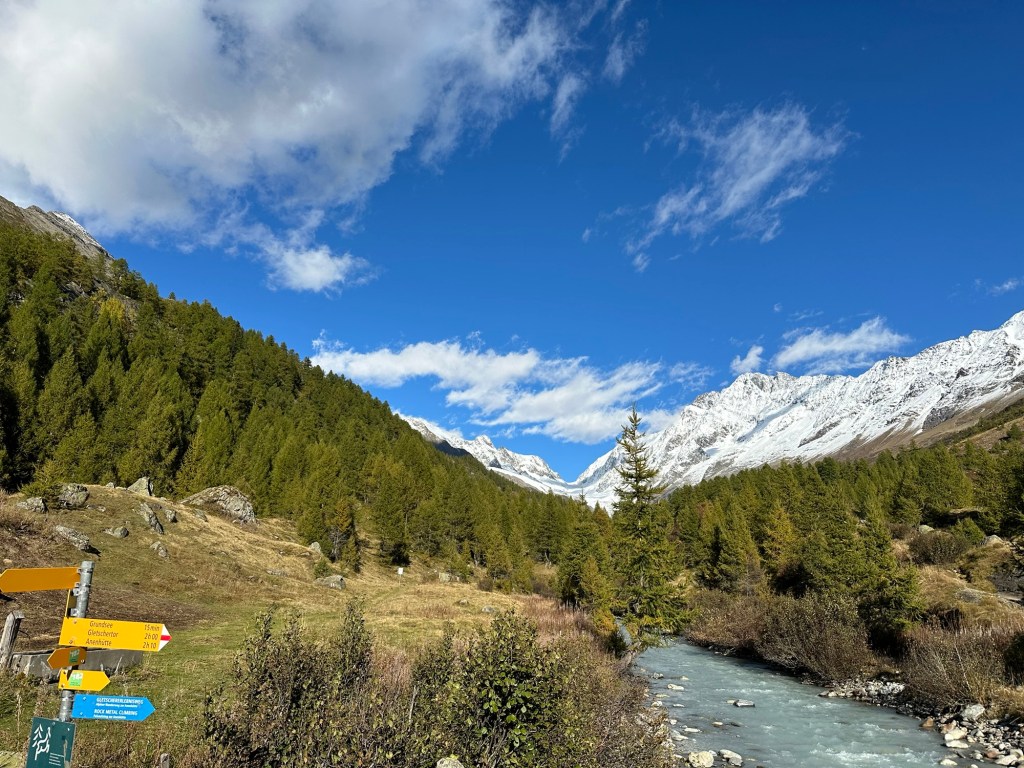
We passed countless glacial erratics: large stones that were transported through the glaciers during the Ice Age. And about 20 minutes before our hiking destination we reached the last lake of the day: the meltwater lake Grundsee. The emerald green water was crystal clear and the stones laying at its bottom seemed almost covered in gold; a natural treasure for sure. Being so close to the hotel at Fafleralp, it was visited by many strollers, who enjoyed the serene atmosphere while enjoying the afternoon sun, read a book or watch their kids play at the lake. It was clear that we had slowly but surely reached more civilization again.


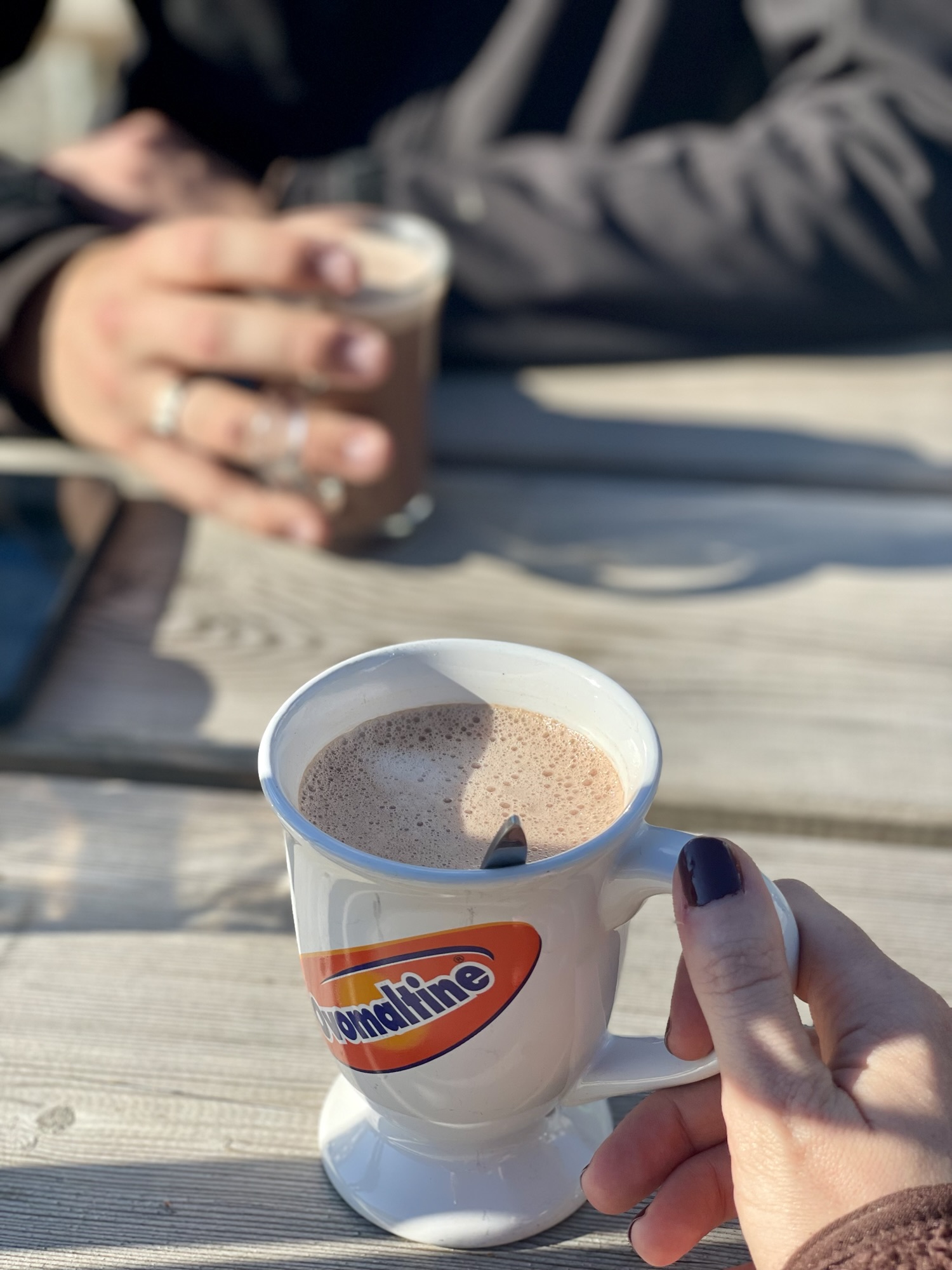
Shortly after, we arrived at the Fafleralp and it’s parking lot Sandbletscha, where our bus would leave and take us back to the village of Wiler. Since we still had a little time left, we enjoyed a hot cocoa at the little café and enjoyed a last look back on our hiking trail and the Langgletscher.
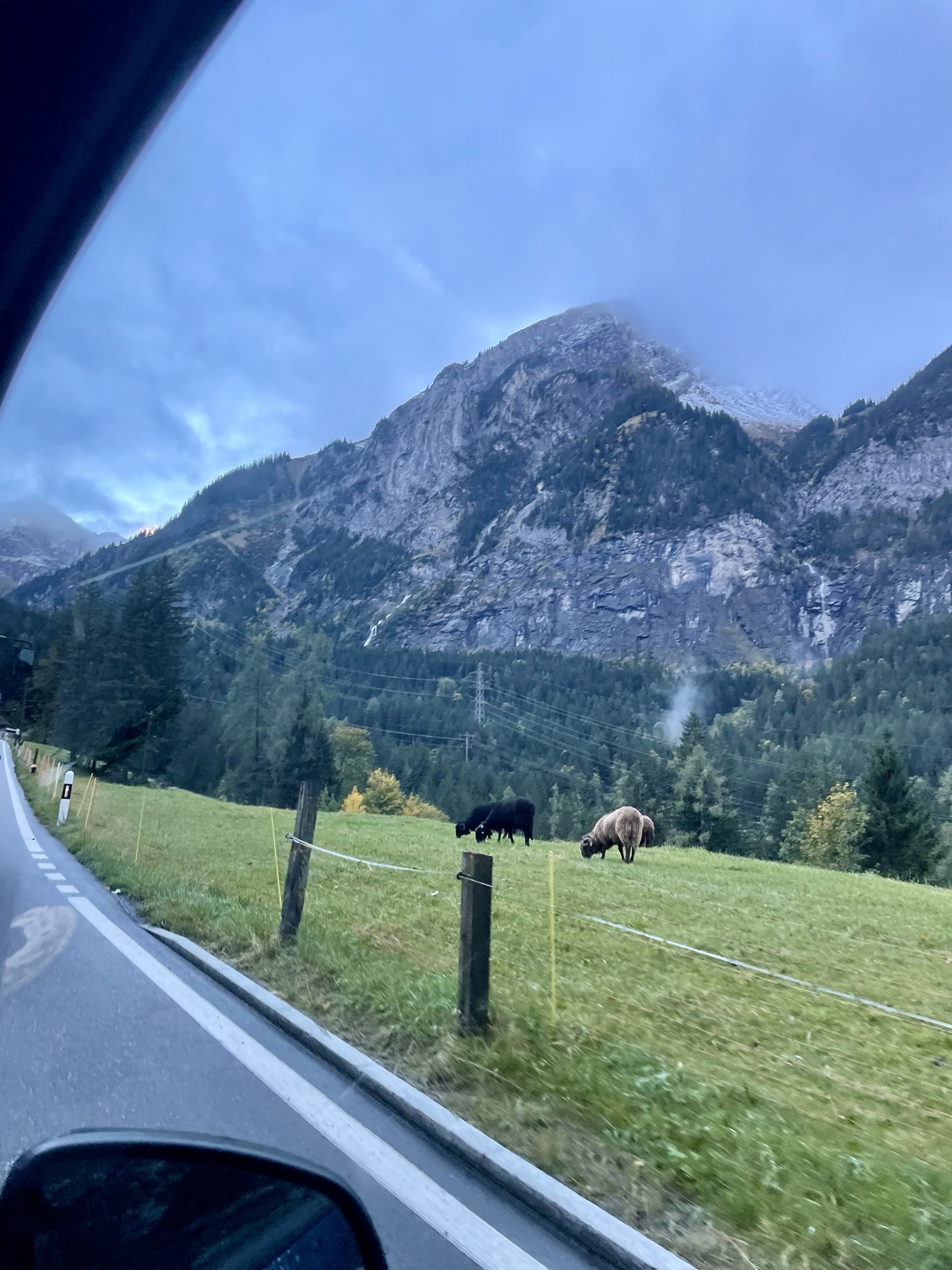
The bus ride was busy and as always, being so closely surrounded by so many different people and contemporary hits on the bus radio, it was hard to not slowly fall out of the magical atmosphere of the last six and a half hours of walking. But all of that was made up for with the car ride that followed past spectacular white mountaintops engulfed in dark pink evening sunlight. It felt like an eternity ago since the morning when we left the foggy and cloudy flatland behind us and entered the mountainy landscape. We had a long ride home ahead of us – plenty of time and space to talk about another irreplaceable adventure in the great outdoors.

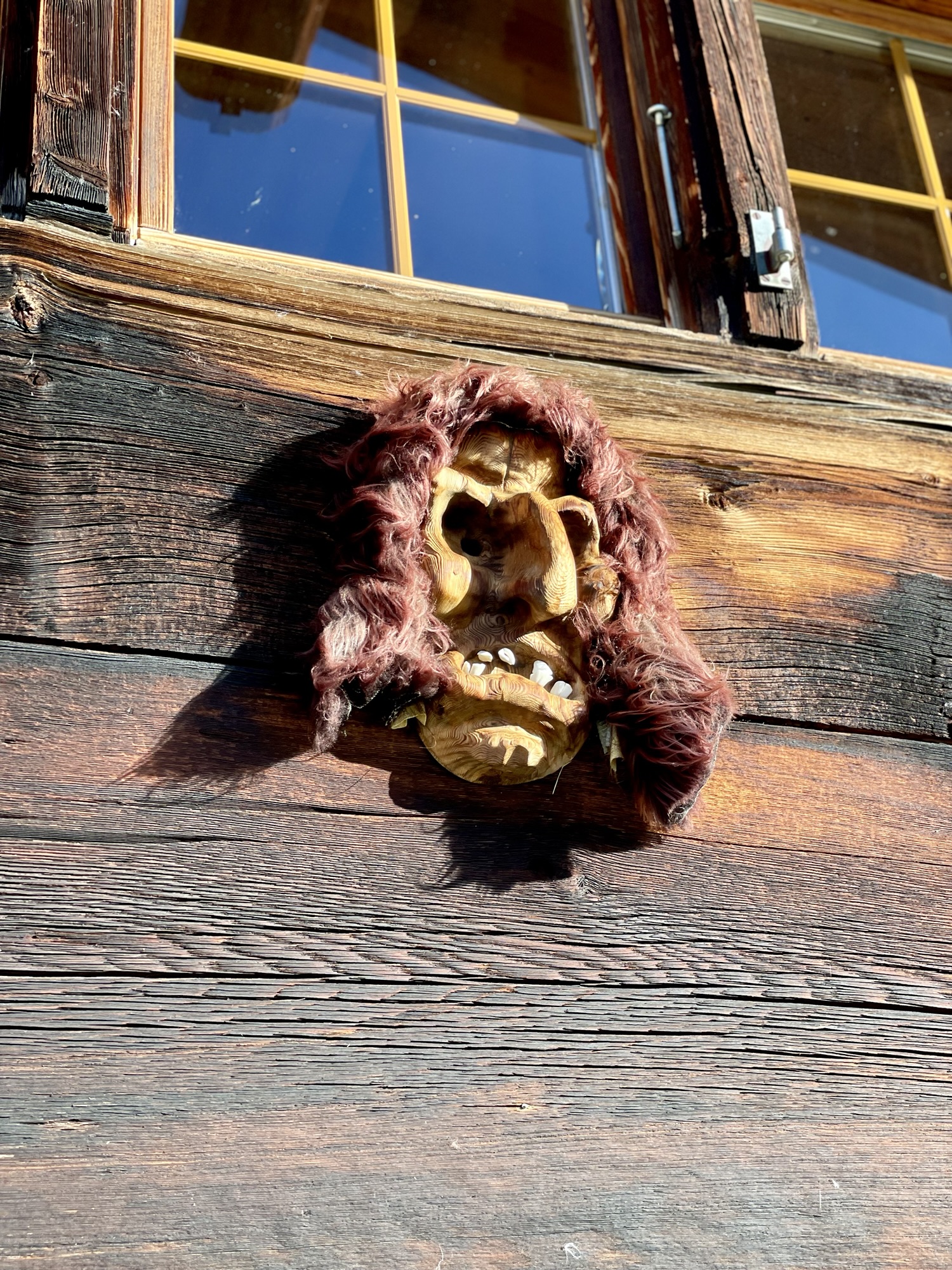
This was a hike rich in ancient culture and legends from the area and as well as ancient natural landmarks. The canton of Valais is known for the celebration of old rituals and traditions and the transfer of old stories; something that has always greatly fascinated me as a kid – especially since some of it do have something slightly scary about them. One only needs to look at the costumes and gnarled wooden masks from the “Tschäggättä”. It often touches me to see old traditions, customs and beliefs still so much alive in people – especially the ones that are so much rooted in its surroundings and nature.
And speaking of that; the aforementioned honor I felt walking among those glaciers, mountains, in those forest, under the yellow larches and along those lakes and rivers is a very special kind of honor. It is truly humbling. That having nature so available to us is a great privilege not everyone gets to experience is something I frequently come to realize when I am hiking and I think I have touched on it before. It comes with the great responsibility that we make sure to take care of our surroundings and furthermore – something that does not always come easy to us humans – to not change it solely to our benefit.
It is for that reason that I was so moved by the sight and atmosphere of the Anenhütte, which to me is very much a testament, that humans can profit from nature without ruining it or overtaking it. To not turn it into something completely different but rather enter a gentle dance with it, where nature always and forever takes the lead.



Click here to see this section on “SchweizMobil”
Details
| Lauchernalp to Fafleralp via Anenhütte | Difficulty: T1/T2 (Hiking Trail/Mountain Hiking Trail) Length: 20.43 km Duration: 6:34 h Ascent/Descent: 995m/1’192m |
Some more useful facts about this hike
- By car the only way to get to the Lötschental is via the car transport (a train that transports you in your car through the tunnel in to the valley. This costs approximately 30 swiss franks one way.
- There is also a regular train driving into the valley and buses that drive all the way through the valley.
- From Wiler you have a cable car bringing you up to the Lauchernalp. Starting from 10 am the cable car brings you all the way up to Stafel.
- There is a little convenience store in Wiler to buy your provisions and Lauchernalp also has a restaurant/café with a beautiful view for a first coffee before starting your hike.
 The Confident Hiker
Leave a comment